Productivity Engineering: 4 Pillars That Drive Business Impact
In today's competitive business landscape, engineering productivity goes far beyond technical efficiencies - it directly shapes your organization's success. Leading companies understand that aligning engineering practices with strategic business goals creates tangible value.
What Is Productivity Engineering?
Productivity Engineering strategically aligns technology, processes, and teams to accelerate software delivery, enhance quality, and drive business outcomes. It consists of four core groups, each contributing uniquely to engineering excellence:
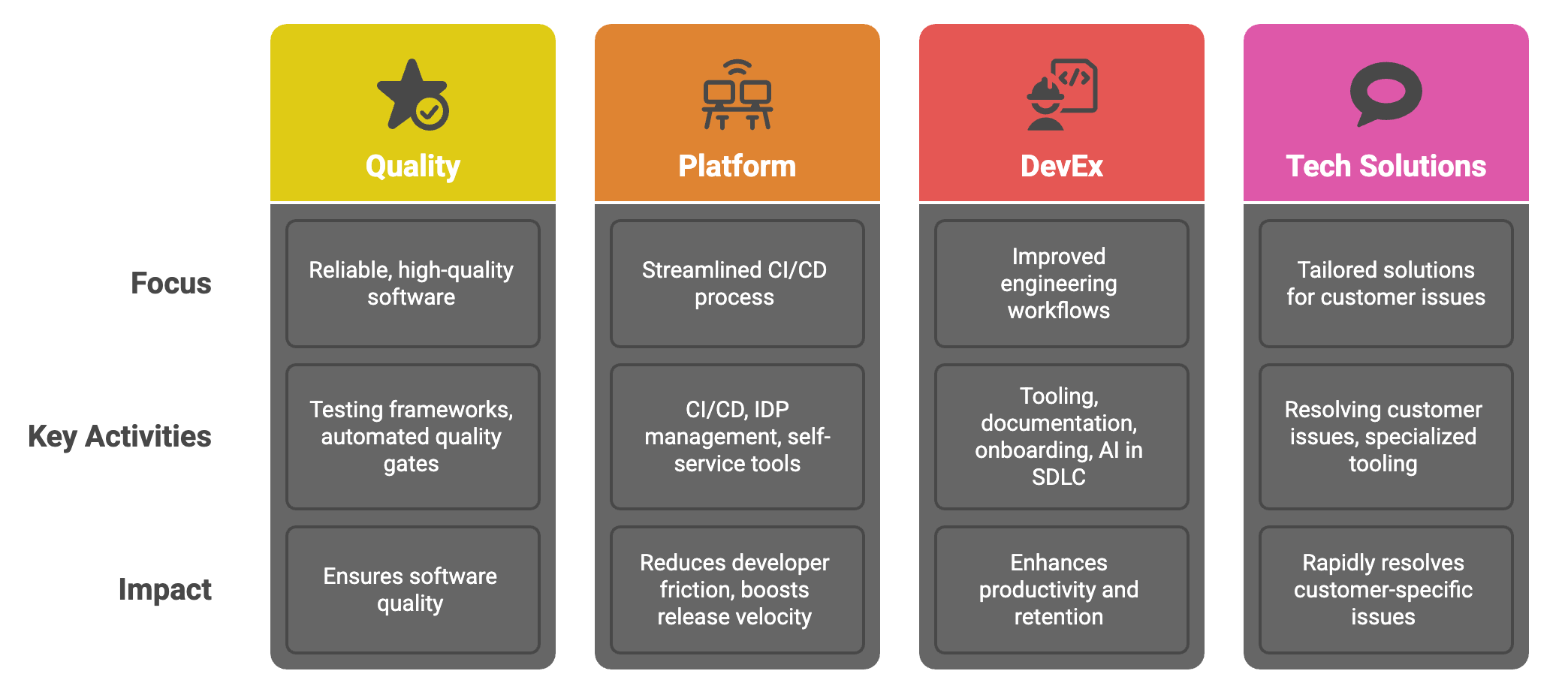
Quality Engineering: Ensures reliable, high-quality software through robust testing frameworks, automated quality gates, performance engineering, and continuous quality improvement.
Platform Engineering: Streamlines the Continuous Integration and Continuous Delivery (CI/CD) process, manages Internal Developer Platforms (IDP), and provides self-service tools, significantly reducing developer friction and boosting release velocity.
Developer Experience: Focuses on improving day-to-day engineering workflows, tooling, documentation, onboarding experiences, and developer satisfaction - directly enhancing productivity and retention. This team also leads initiatives around AI in the SDLC, integrating intelligent tools to assist in coding, debugging, documentation, and developer support.
Tech Solutions Engineering: Provides specialized, tailored solutions and tooling to rapidly resolve customer-specific issues, misconfigurations, and unique technical challenges, closely partnering with support and customer-facing teams.
Productivity Engineering Mission
Empowering engineering teams to deliver high-quality software faster and more reliably through strategic tooling, ai, automations, experience, and process optimization.
Bridging Engineering and Business Success
At the heart of every high-performing organization is productivity engineering - a strategic discipline that clearly connects technical improvements to measurable business outcomes. The right engineering practices don't just enhance technical teams; they boost customer satisfaction, accelerate growth, and drive profitability.
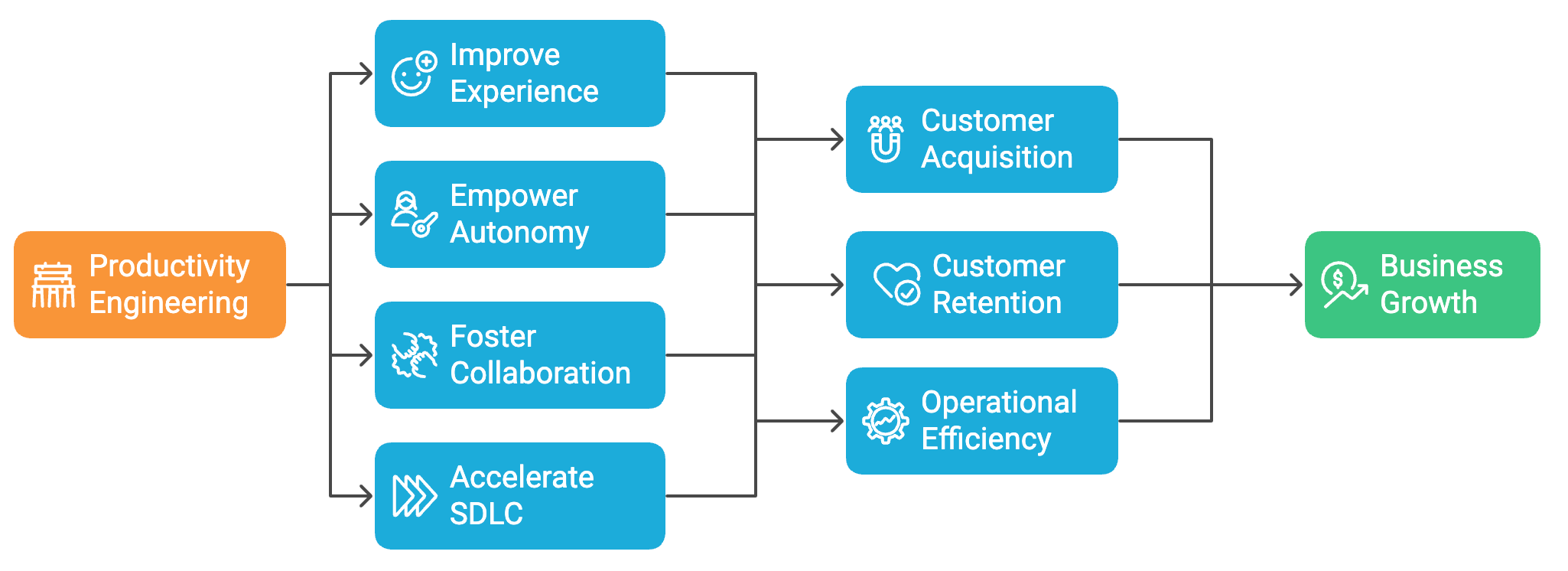
Here's how the four pillars of engineering productivity translate into the three critical business outcomes that matter most.
The 4 Pillars of Engineering Productivity
Pillar 1: Improve Experience
A smooth, intuitive developer experience drives productivity, satisfaction, and innovation. When developers have seamless workflows, well-integrated tools, and thoughtful documentation, they can focus on solving real business problems instead of navigating fragmented systems. A great developer experience reduces time-to-onboard, increases engagement, and helps attract and retain top talent. From streamlined local development environments to consistent CI pipelines and efficient debugging processes, the DevEx pillar creates the foundation for scalable engineering productivity.
Contributing Group(s): Developer Experience (DevEx)
AI Advantage:
- Personalized development environments tailored to individual preferences.
- Intelligent suggestions for workflow optimizations.
- Automation of repetitive setup tasks and proactive assistance to reduce cognitive load.
Pillar 2: Empower Autonomy
Empowering engineering teams to make independent decisions accelerates delivery and fosters ownership. Autonomy thrives on robust self-service platforms, standardized infrastructure, and reliable automation that minimizes cross-team dependencies. This pillar focuses on removing blockers so developers can ship confidently without waiting on centralized approvals. Whether provisioning environments, deploying features, or accessing metrics - teams can move faster when autonomy is built into the engineering platform.
Contributing Group(s): Platform Engineering, Developer Experience
AI Advantage:
- Self-service platforms that allow developers to provision resources and resolve common issues autonomously.
- Automated guardrails that enforce standards without manual oversight.
- Intelligent monitoring to safely balance autonomy and control.
Pillar 3: Foster Collaboration
Breaking down silos and enhancing cross-functional collaboration boosts problem-solving speed and aligns engineering with broader business goals. This pillar emphasizes integrated workflows, shared context, and clear communication between engineering, product, design, and customer-facing teams. Effective collaboration ensures faster decision-making, fewer handoffs, and improved clarity on ownership. It also creates a culture of accountability and shared success that improves overall organizational alignment.
Contributing Group(s): Developer Experience, Tech Solutions Engineering
AI Advantage:
- Detection of knowledge gaps between teams and automated expert recommendations.
- Enhanced code review processes with intelligent suggestions.
- AI-driven translations of technical insights for clear, effective communication across teams.
Pillar 4: Accelerate the Software Development Lifecycle (SDLC)
Optimizing each phase of the SDLC - from planning and coding to testing and deployment - eliminates friction and accelerates software delivery, directly enhancing competitive agility. This pillar is about building velocity with quality, ensuring the right tools, feedback loops, and governance are in place to support fast, reliable releases. It includes everything from better planning workflows and code quality gates to automated testing and smart rollout strategies. Accelerating the SDLC isn't just about speed - it's about improving predictability, stability, and responsiveness to change.
A key component of this acceleration is the strategic use of AI across all stages of the SDLC. AI enhances planning accuracy through automated documentation and architectural recommendations, speeds up coding with real-time assistance and intelligent refactoring, improves build stability with predictive analytics, and strengthens quality with smart test selection and self-healing test environments. By embedding AI deeply into development workflows, organizations can significantly reduce time-to-value, increase code confidence, and continuously optimize engineering throughput.
Contributing Group(s): Quality Engineering, Platform Engineering, Developer Experience
AI Advantage Across SDLC:
Planning:
- Automated system documentation and technical specifications.
- AI-driven task breakdown and architecture guidance.
- Predictive data modeling that anticipates future scalability.
Coding:
- Real-time AI-assisted pair programming.
- Automated code reviews and smart refactoring.
- Intelligent code completion and reuse recommendations.
Build:
- Optimized build processes through smart caching.
- Predictive analytics for build failure detection.
- Dynamic, scalable environment provisioning.
Testing:
- AI-generated test cases targeting critical code paths.
- Smart test prioritization to identify impactful tests.
- Automated bug detection and self-healing test infrastructures.
Organizations leveraging AI throughout the SDLC experience substantial gains in efficiency, speed, and quality, securing a significant competitive edge.
Translating Pillars into Business Outcomes
These four engineering pillars directly influence three critical business metrics:
1. Customer Retention
Rapid deployments, stable platforms, and proactive issue resolution lead to satisfied, loyal customers. When engineering teams can consistently deliver high-quality experiences, customers gain trust and confidence in your product. Quick turnaround on feedback and the ability to resolve bugs without regressions strengthens user relationships over time.
Business Impact: Increased retention rates yield stable revenue streams, higher lifetime customer value, reduced churn, and stronger Net Promoter Scores (NPS). Retaining existing customers is significantly more cost-effective than acquiring new ones, making this a cornerstone of long-term business health.
2. Customer Acquisition
Swift delivery of innovative, high-impact features enables your organization to meet emerging market demands ahead of competitors. Engineering agility makes it possible to test, iterate, and release customer-facing capabilities faster, capturing attention and delivering differentiated value.
Business Impact: Accelerated feature delivery boosts market share, reduces time-to-revenue from new customers, and enables faster experimentation in go-to-market strategies. This leads to stronger brand recognition, higher conversion rates, and more efficient sales and marketing cycles.
3. Operational Efficiency
Operational excellence is achieved when engineering teams can do more with less - less manual toil, fewer blockers, and less rework. Automation, intelligent workflows, and performance visibility reduce time spent on non-value-adding activities. This frees up teams to focus on innovation and customer impact rather than firefighting or repetitive tasks.
Business Impact: Lower operating costs, improved engineering throughput, better ROI on tooling investments, and more predictable delivery timelines. These efficiencies directly contribute to higher profitability and allow reallocation of resources to growth and innovation initiatives.
Creating a Strategic Connection
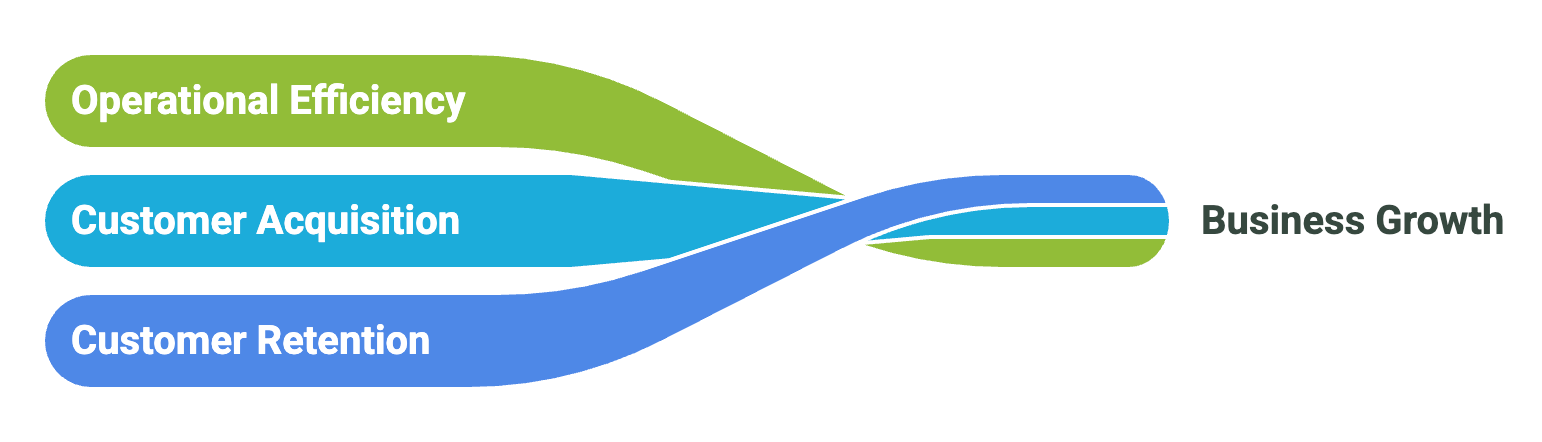
Leading companies explicitly tie engineering improvements to measurable business outcomes. Instead of merely tracking technical metrics, they highlight how each enhancement boosts customer satisfaction, acquisition efficiency, and operational effectiveness.
By clearly demonstrating how these four productivity pillars impact your core business objectives, productivity engineering transitions from a technical function to a vital strategic asset - essential for thriving in today's competitive, technology-driven market.
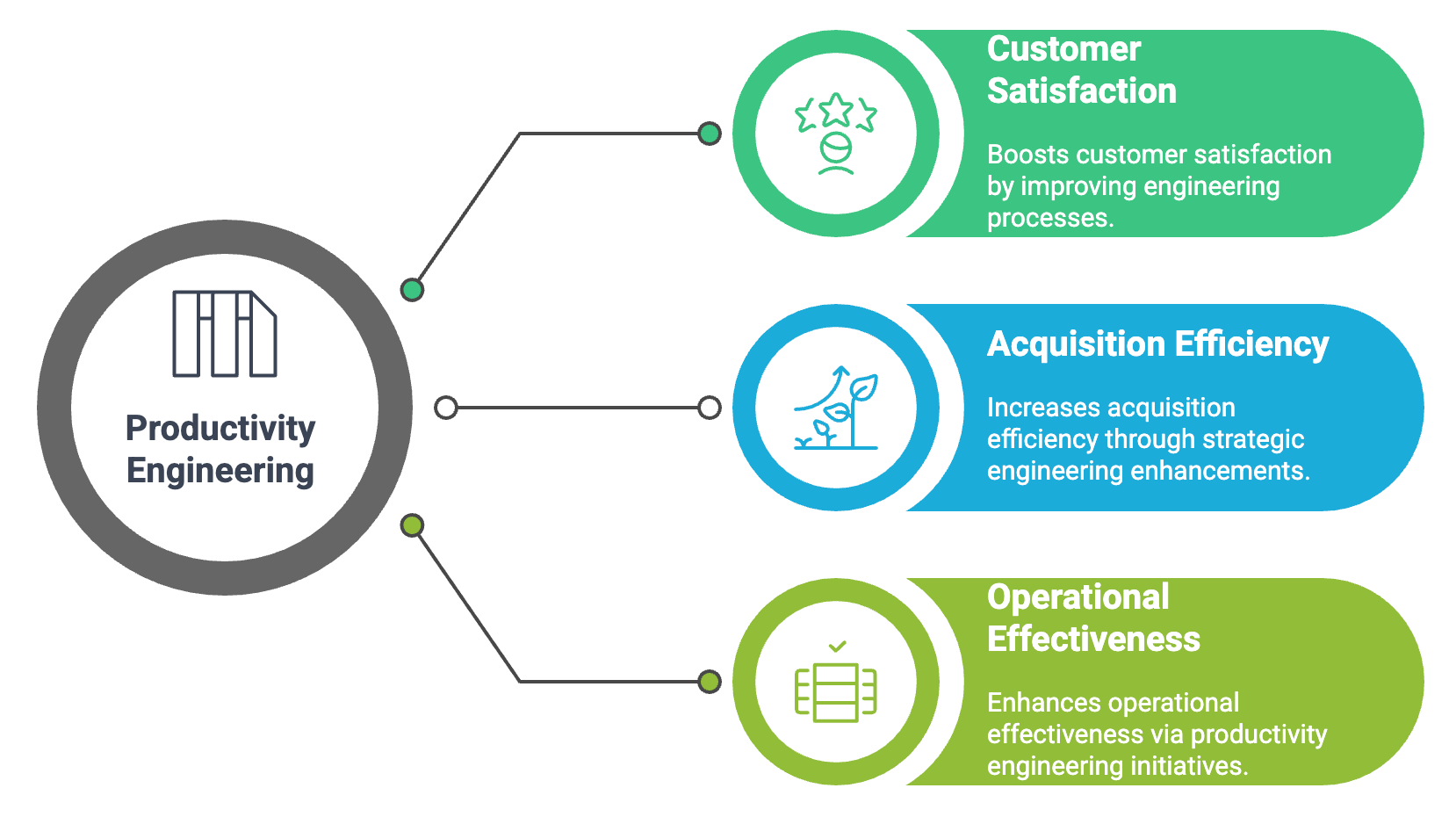
Evaluate your productivity engineering initiatives through this strategic lens, and you'll unlock deeper alignment, stronger performance, and sustained business success.


Comments ()