Engineering leadership is the work of deciding where a team's capacity goes: which platform investments to fund, which tools to roll out, and which problems to leave alone. These posts cover decisions made running a global productivity engineering organization, including a 400+ developer AI coding assistant rollout, and how to connect engineering effort to outcomes the business already tracks.
AI adoption should strengthen existing productivity goals, not create a parallel strategy. Learn how to evaluate AI tools through productivity metrics, technical debt, team health, pilots, and rollback triggers.
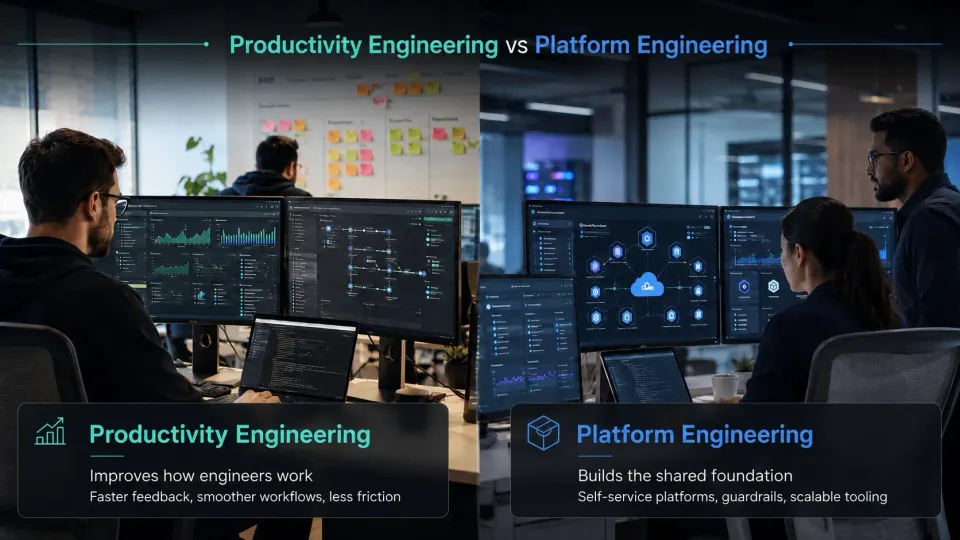
Productivity Engineering improves how engineers work by reducing friction, speeding feedback loops, and automating repetitive tasks. Platform Engineering builds the shared platforms, infrastructure, and self-service capabilities that teams rely on at scale.
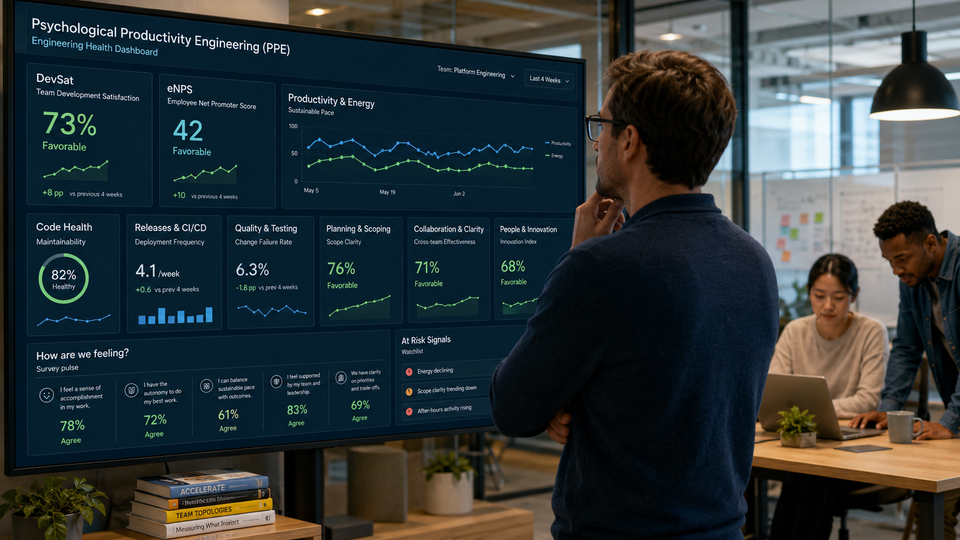
Two teams can post identical delivery numbers while one thrives and the other burns out. Psychological Productivity Engineering measures the human substrate beneath the output: a structured survey, a DevSat score, and a feedback loop that catches problems before they cost you people.
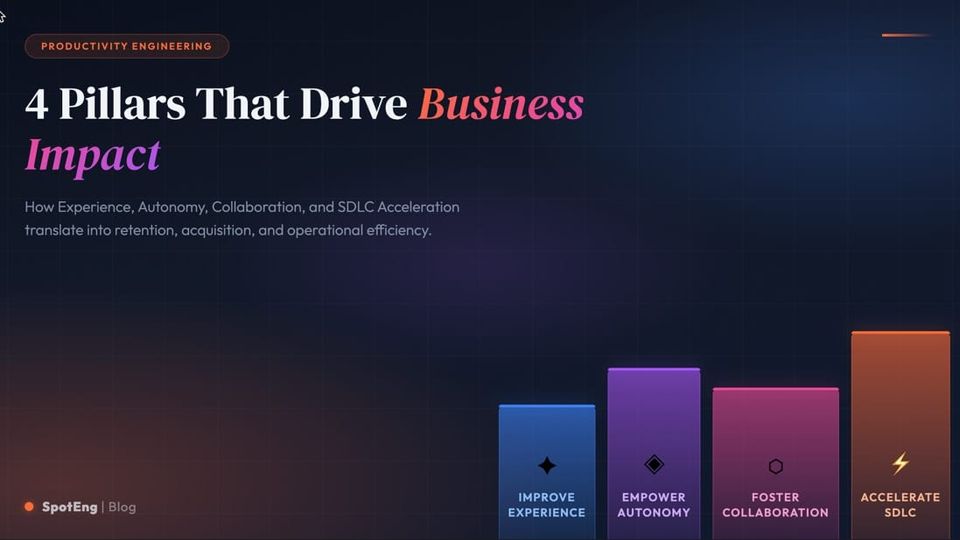
Four pillars: improve experience, empower autonomy, foster collaboration, accelerate the SDLC. Here is how each one maps to the three outcomes your business already tracks: retention, acquisition, and operational efficiency.
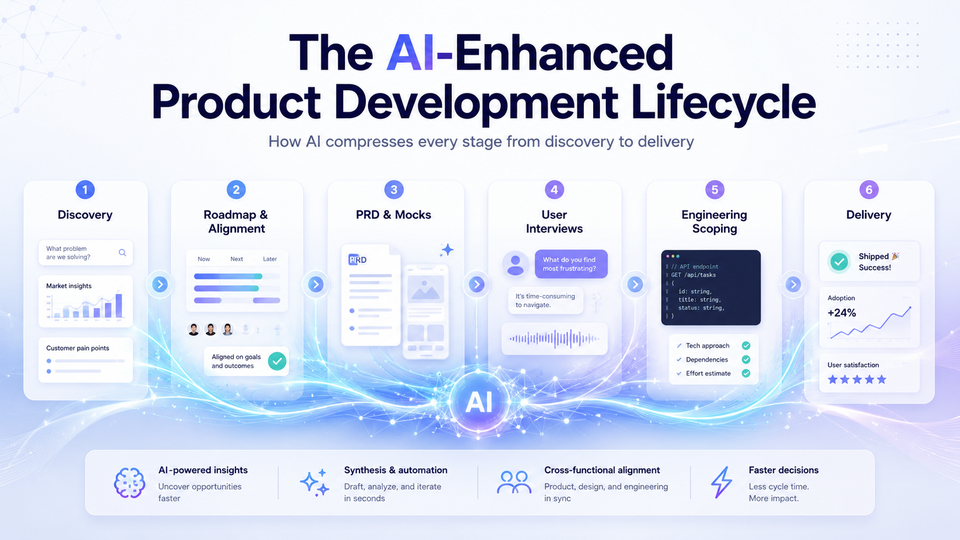
AI isn’t replacing product development - it’s compressing it. Learn how teams use AI across discovery, roadmap alignment, PRDs, user research, engineering scoping, and delivery to ship better products faster without sacrificing ownership or quality.