Engineering productivity is the rate at which a team converts effort into working, maintainable software that reaches users. It is a property of the system, not the individual. These posts cover the four pillars that connect productivity to business outcomes, the psychological factors that separate two teams posting identical delivery numbers, and how to raise throughput without gaming the measurement.
AI adoption should strengthen existing productivity goals, not create a parallel strategy. Learn how to evaluate AI tools through productivity metrics, technical debt, team health, pilots, and rollback triggers.
Faster code generation does not produce cleaner code. It produces more code. Here is the loop we run instead of debt sprints: scheduled scans, agent-generated pull requests, and two numbers that tell you whether it is actually working.
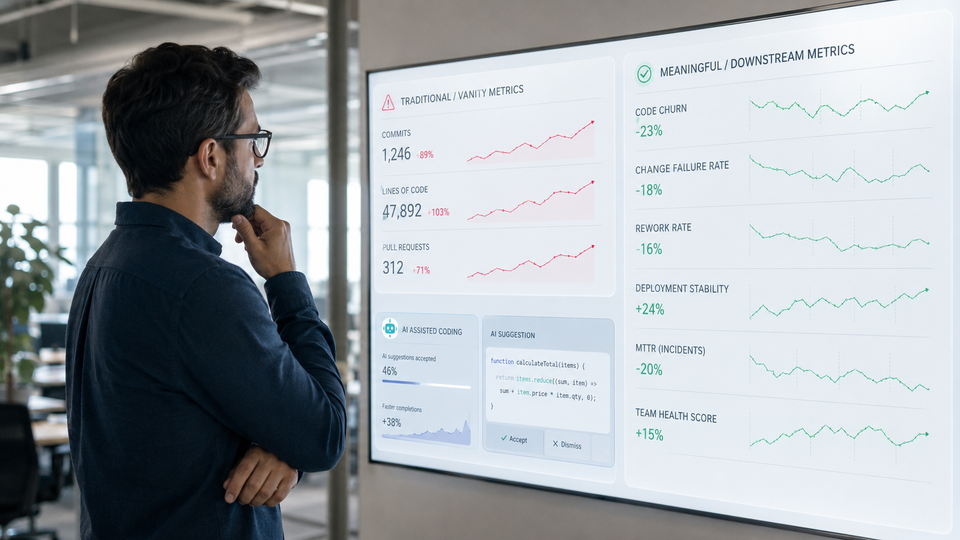
AI hasn't made engineering productivity unmeasurable. It's made the easy metrics dangerous, inflating commits and lines of code automatically, widening the gap between feeling fast and being fast, and hiding real costs downstream. Here's what breaks, why, and what to measure instead.
Two teams can post identical delivery numbers while one thrives and the other burns out. Psychological Productivity Engineering measures the human substrate beneath the output: a structured survey, a DevSat score, and a feedback loop that catches problems before they cost you people.
You cannot measure velocity directly without corrupting it. Measure flow instead. Cycle time, deployment frequency, change failure rate, restore time, and one satisfaction signal, plus what to track at your org size.