Engineering productivity is the rate at which a team converts effort into working, maintainable software that reaches users. It is a property of the system, not the individual. These posts cover the four pillars that connect productivity to business outcomes, the psychological factors that separate two teams posting identical delivery numbers, and how to raise throughput without gaming the measurement.
Tech debt is a hidden tax on engineering, quietly consuming 25–40% of developer capacity. Traditional approaches can't keep up. AI doesn't make tech debt disappear, but it changes the economics of managing it, turning a reactive chore into a measurable, strategic advantage for organizations.
Four pillars: improve experience, empower autonomy, foster collaboration, accelerate the SDLC. Here is how each one maps to the three outcomes your business already tracks: retention, acquisition, and operational efficiency.
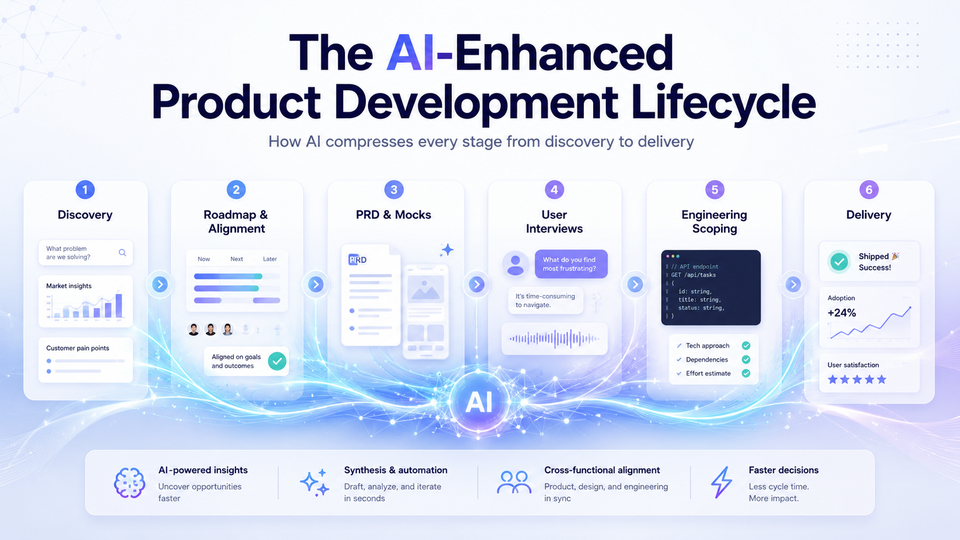
AI isn’t replacing product development - it’s compressing it. Learn how teams use AI across discovery, roadmap alignment, PRDs, user research, engineering scoping, and delivery to ship better products faster without sacrificing ownership or quality.
Software organizations face a critical challenge in measuring and improving developer productivity. While the technology industry spends over $300 billion annually on software development, studies show that:
* 35% of development effort is wasted
In modern software development, measuring productivity is critical to ensuring high-quality output while maintaining speed and efficiency. However, productivity should not be assessed in isolation—quality and efficiency must be balanced to