How to Balance AI Adoption With Engineering Productivity

Engineering leaders balance AI adoption with existing productivity goals by extending their current productivity engineering practices rather than treating AI as a standalone initiative.
They begin with established measurement principles focused on outcomes and technical debt, then evaluate every AI use case against those same targets before rollout.
This keeps productivity metrics stable while identifying where AI accelerates progress and where it risks new problems.
Ground AI Adoption in Core Productivity Measurement Principles
Start every AI conversation by returning to the four pillars of productivity engineering that already guide the team.
These pillars cover efficiency, quality, and growth, and they provide the baseline against which any new tool must be judged. Introducing AI without this foundation usually leads to mismatched expectations and metrics that no longer reflect real delivery speed or reliability.
Walk through the current measurement system first.
Review how cycle time, review throughput, and defect escape rates are tracked today. Ask which of these indicators would change if engineers spent less time on boilerplate code or more time on design reviews. This exercise reveals whether the team is ready to add AI or whether foundational measurement gaps need closing first. Document the existing process for handling technical debt. Note the criteria used to decide when debt gets repaid versus deferred.
Once those rules sit in plain view, any proposed AI coding assistant can be tested against the same criteria instead of a separate AI strategy document. The result is a single set of standards that apply whether the change comes from a new framework, a process tweak, or an AI tool.
To make this concrete, pick one active project and list every metric the team already watches on a single page. For each metric write the current definition, the data source, and the person who owns updates.
Then run a short workshop where engineers list three tasks they repeat weekly and mark which metrics would shift if those tasks took half the time. The workshop output shows exactly where AI could plug in and which metrics would need extra attention during rollout.
Mapping AI Stages to Productivity and Tech Debt Targets
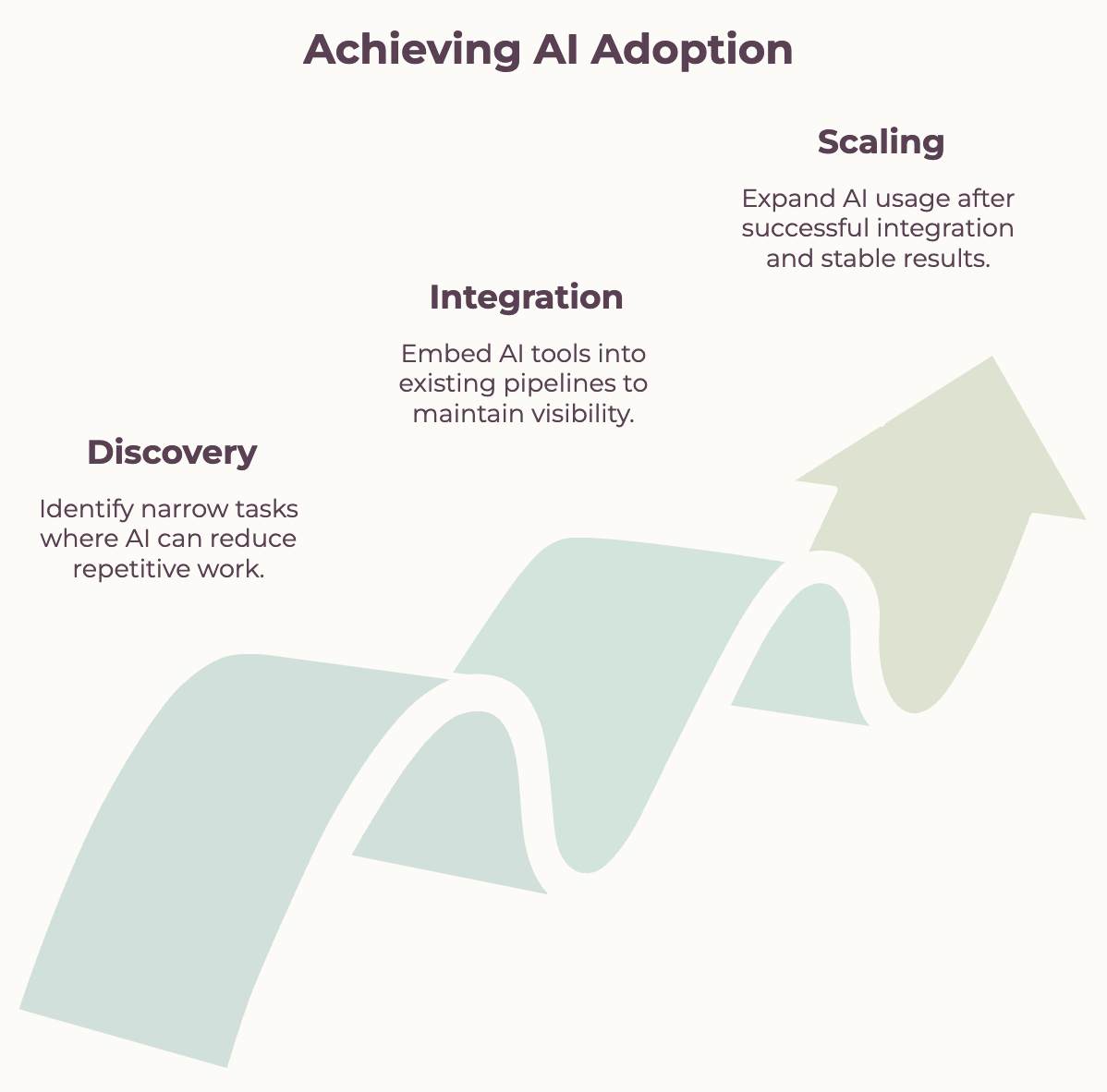
Break AI adoption into clear stages and test each one against the productivity goals already in place.
The first stage is discovery: identify narrow tasks where AI can reduce repetitive work without altering ownership of outcomes.
The second stage is integration: embed the tool inside existing review and deployment pipelines so cycle time and quality signals remain visible.
The third stage is scaling: expand usage only after the first two stages show stable or improved results on the original metrics.
At each stage, create a simple side-by-side view. On one side list the productivity goal, such as reducing time from commit to production. On the other side list the specific AI activity and the expected effect on that goal. If the expected effect cannot be stated in terms of the existing goal, the activity stays in the discovery stage until a clearer connection appears.
Track technical debt reduction targets the same way. Some AI activities, such as automated test generation, can shorten the time needed to cover legacy modules. Others, such as rapid generation of new service scaffolding, can increase the surface area that later requires maintenance. The mapping exercise makes these differences visible before code reaches production.
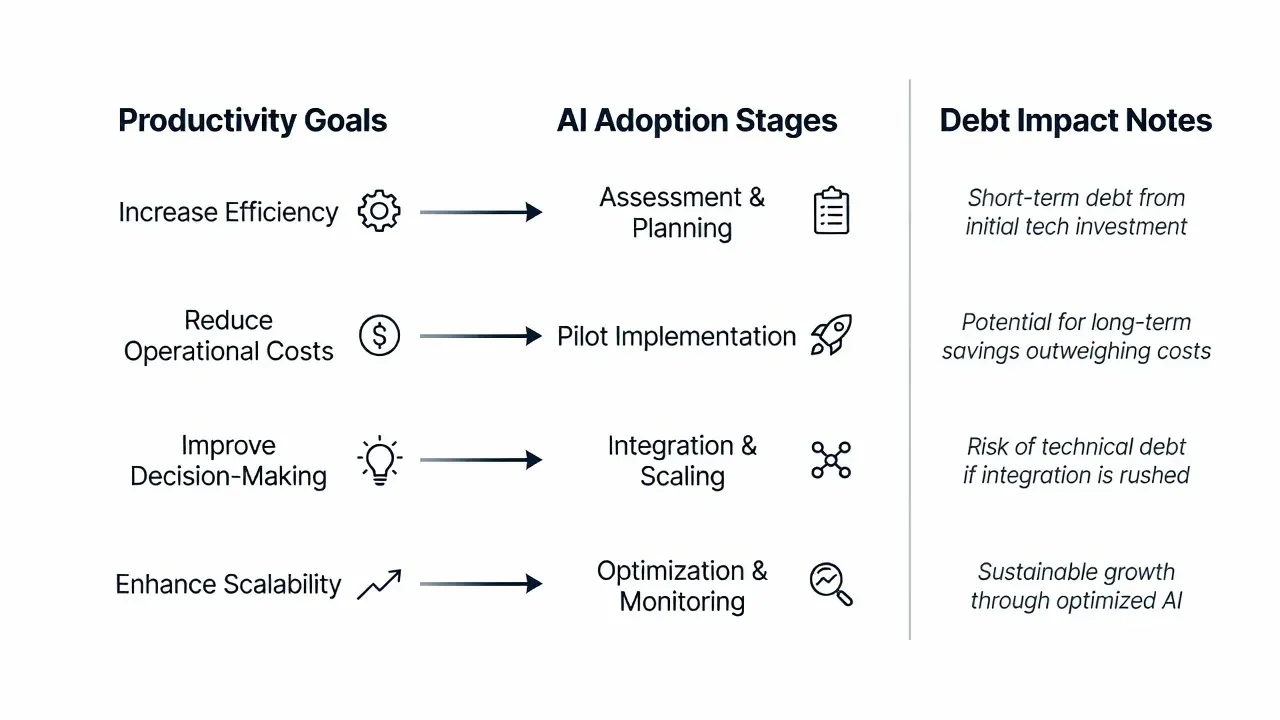
A worked example helps here:
Suppose the goal is to cut the time from commit to production by 20 percent. In discovery the team tests an AI tool that writes unit tests for a single legacy module. They measure the change in review time and defect escape rate for that module only.
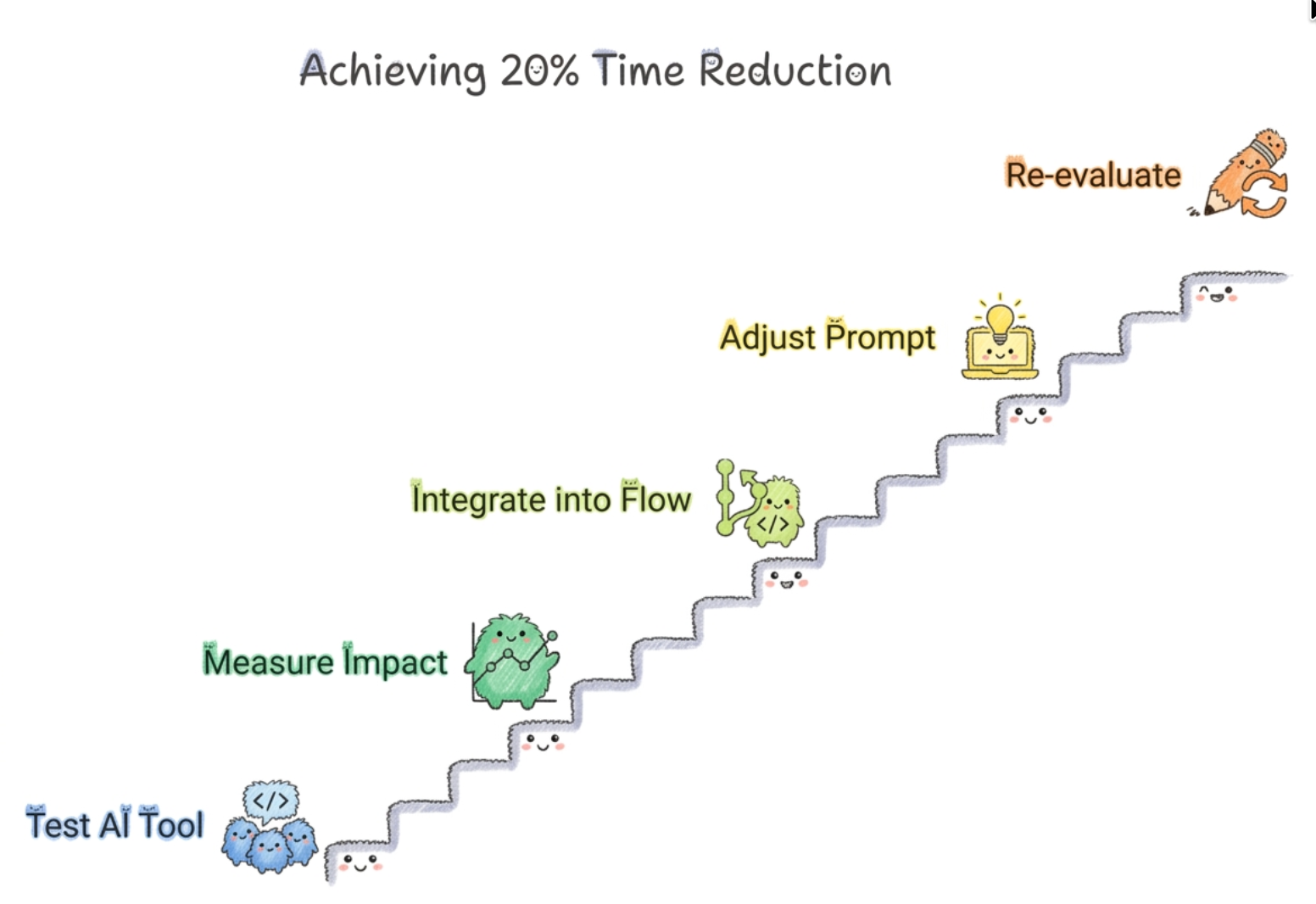
If both stay flat or improve, the tool moves to integration inside the normal pull-request flow. If review time rises because the generated tests need heavy rewriting, the team stops and adjusts the prompt style before trying again.
Choosing Measurement Frameworks That Avoid Lines of Code
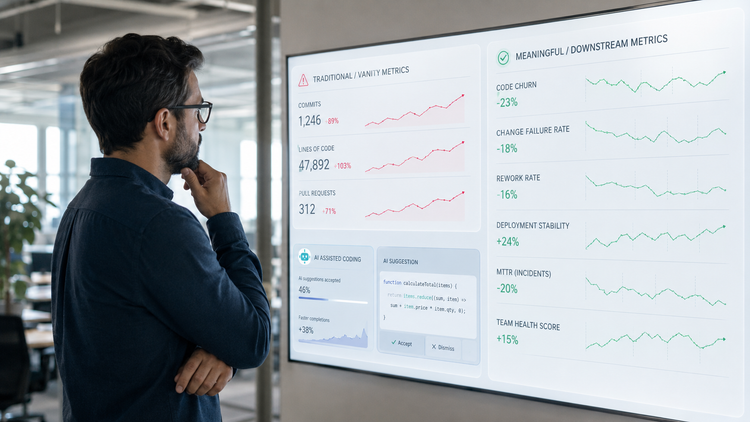
Rely on frameworks that already separate output volume from outcome quality. SPACE and DORA metrics both emphasize deployment frequency, change failure rate, and time to restore service. These indicators stay relevant when AI tools change how much code an individual writes in a day. They continue to reflect whether the overall system moves forward or stalls. Add team-health signals that sit alongside the technical metrics. Survey items about clarity of work, perceived review quality, and sense of progress provide early warning when AI suggestions start to reduce ownership. The combination of technical and perceptual data prevents the common error of celebrating higher commit counts while delivery speed actually slows.
Revisit the measurement approach every quarter.
When an AI feature changes how engineers spend their time, adjust the weight given to each indicator rather than adding entirely new dashboards. This keeps the reporting simple enough that leaders can act on it without waiting for a separate AI analytics project to mature. For deeper detail on avoiding volume-based traps, see the guide to beyond lines of code metrics.
One practical way to apply this is to run a monthly review that looks only at the five core signals the team already trusts. During that review, ask whether any AI-generated pull request changed the signal in a way the team did not expect. If a signal moves the wrong way, trace it back to the exact task the AI performed and decide whether the prompt, the review step, or the rollout scope needs adjustment.
Spotting AI's Role in Technical Debt Repayment and Creation
AI can accelerate repayment when it automates the creation of tests or documentation for older modules that teams have avoided touching.
The same tools can also generate new debt when they produce code that passes initial review but lacks clear interfaces or error handling. The difference lies in the review process that surrounds the generated output. Establish a rule that every AI-generated change must pass the same debt checklist used for human-written changes. The checklist covers interface clarity, test coverage, and alignment with current architecture. If the generated change fails any item, it receives the same remediation steps as any other debt item instead of special treatment.
Monitor the rate at which new modules enter the codebase versus the rate at which older debt is retired. When the entry rate rises faster than the retirement rate, pause expansion of AI usage in that area.
The pause gives the team time to strengthen the review guardrails before the imbalance grows. One useful reference for this balance is the discussion of tech debt and ai. Edge cases appear quickly in practice. A generated test suite may reach 80 percent coverage yet miss the error paths that only surface under load. In that situation the checklist still flags the gap, and the team adds the missing tests manually rather than declaring the debt repaid. Another common pattern is AI-generated helper functions that duplicate existing utilities; the architecture check catches the duplication before the code merges.
Incorporating Psychological and Team Health Factors
Apply the lens of psychological productivity engineering when rolling out AI changes. This means measuring how the new tools affect engineers' sense of control, clarity of expectations, and confidence in the quality of their work. Without these signals, adoption can appear successful on velocity charts while actual engagement drops.
Introduce short, recurring surveys that ask about workload clarity and perceived quality of AI suggestions.
Track the responses alongside the technical metrics. A decline in perceived control often precedes a rise in escaped defects or longer recovery times after incidents. Adjust rollout pacing based on these signals. If a team reports lower clarity after the first month of AI assistance, slow the introduction of new features and spend time refining prompt patterns or review guidelines.
The goal is to keep the psychological conditions that support steady output intact while the technical tooling evolves. Learn more about this approach in the overview of psychological productivity engineering. Trade-offs surface here as well.
Faster code generation can reduce the time engineers spend on repetitive tasks, yet it can also reduce the number of small decisions they make each day. Over time that reduction can weaken their feel for the system. Teams that notice this pattern often keep a small set of tasks entirely human-written so the skill of making architectural choices stays sharp.
A Decision Checklist for New AI Frameworks / Tools
Use a short checklist to evaluate any proposed AI addition against current workflows. The checklist contains five questions that must receive clear answers before approval:
- Does the tool map directly to an existing productivity goal or debt target?
- Can its impact be observed through the metrics already collected?
- Does the generated output pass the same debt and quality checks applied to human work?
- Will the change preserve or improve the team's reported sense of control and clarity?
- Is there a defined point at which usage will be paused or reversed if signals move in the wrong direction?
Run the checklist with the engineers who will use the tool and with the leaders responsible for the productivity metrics. If any answer is uncertain, treat the item as still in discovery and gather the missing information before wider deployment.
This keeps AI decisions inside the same decision process used for other productivity changes. A common mistake is to treat the checklist as a one-time gate. In reality the answers can shift after a few weeks of use. Schedule a short follow-up review four weeks after any new tool is approved so the team can update the answers with real data instead of expectations.
Handling Rollback Triggers and Pilot Boundaries
Define rollback triggers before any pilot begins. A trigger might be a 10 percent rise in review rework time, a drop in survey scores about work clarity, or an increase in incidents tied to generated code. Write the trigger numbers down and share them with the pilot team so everyone knows when to stop. Keep the pilot scope small enough that a rollback stays practical. Limit the tool to one squad or one service for the first four weeks. Track every generated change in a separate tag so it can be identified and reviewed quickly if problems appear.
This boundary also makes it easier to compare the pilot group against the rest of the organization on the same metrics. After the pilot window, hold a short retrospective that looks only at the original productivity goals and the checklist answers. If the data shows improvement or no harm, the next step is a controlled expansion to a second team. If any trigger fired, the team documents the exact cause and adjusts the review process or prompt library before trying again.
Frequently Asked Questions
How do we measure whether AI tools are actually improving team productivity?
Track the same outcome metrics already in use, such as cycle time and change failure rate, before and after introduction. Compare these against the specific tasks the AI tool is meant to affect. If the outcome metrics do not move in the expected direction within a defined window, treat the tool as neutral or negative rather than an automatic gain.
What signals show AI adoption is increasing technical debt?
Watch the ratio of new modules added to debt items retired. Also monitor review comments that flag unclear interfaces or missing tests on AI-generated changes. A sustained rise in either indicator points to debt growth that needs attention before further rollout.
Which productivity metrics remain reliable once AI coding assistants are in use?
Metrics tied to end-to-end flow, such as deployment frequency and time to restore service, stay reliable because they reflect system behavior rather than individual output volume. Pair them with perceptual measures of review quality and work clarity to catch shifts that pure technical numbers might miss.
How should engineering leaders communicate AI-driven workflow changes to their teams?
Present the change as an adjustment to an existing productivity process rather than a new program. Share the checklist used to approve the tool and the metrics that will be watched. Invite engineers to surface early signals about clarity or quality so adjustments can happen quickly.
Where does AI fit inside an existing four-pillar productivity engineering model?
AI sits inside the efficiency and quality pillars as one possible method for reaching defined targets. It does not create a fifth pillar. Every proposed use must still demonstrate a link to an existing goal and pass the same measurement and debt checks applied to other changes.
What happens if the pilot shows mixed results on different metrics?
Return to the side-by-side mapping and isolate which AI activity affected which metric. Adjust the scope or review steps for that activity only, then run a second short pilot before deciding on wider use.
How often should the checklist be revisited after initial approval?
Review the answers at the four-week mark and again at the end of the first quarter. Use any changes in the data to update prompt guidelines, review requirements, or rollout pace before the next expansion step.
The practical step is to take the current productivity measurement system and run one AI use case through the mapping and checklist process this week. The output will show whether the idea strengthens existing goals or requires more preparation before it moves forward.
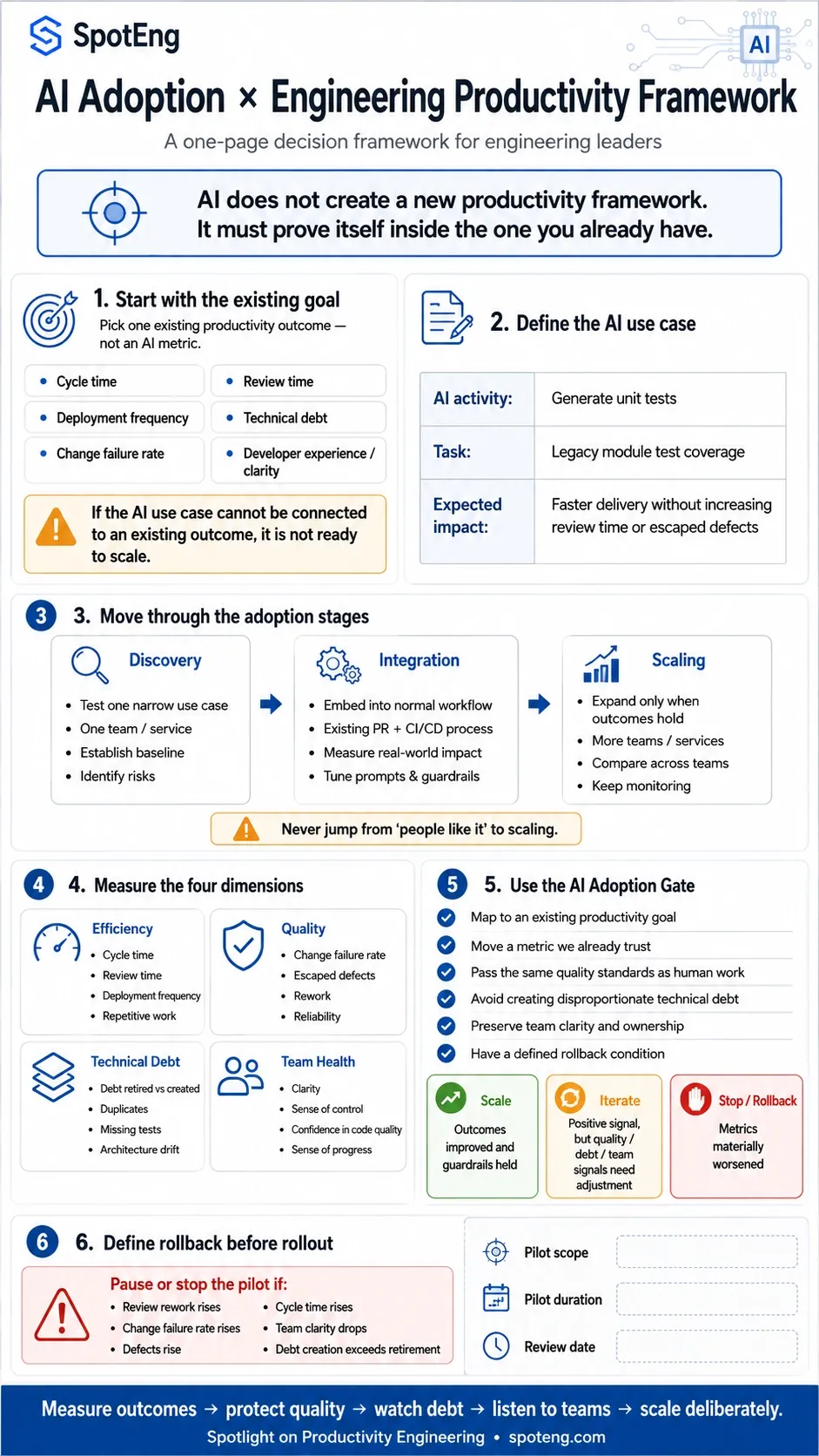
I created an infographic card that might help, feel free to download / save:



Comments ()