Engineering metrics are the signals leaders use to judge delivery speed, quality, and team health. DORA covers flow, SPACE and DevEx cover the human side, and none of them works as a single scorecard. These posts cover which measures hold up under pressure, which ones invite gaming, and why AI-assisted development quietly inflates the volume metrics most dashboards still report.
AI token usage, prompts, seats, and AI-generated code can show adoption -but not productivity. Learn why “tokenmaxxing” is a vanity metric and what engineering leaders should measure instead.
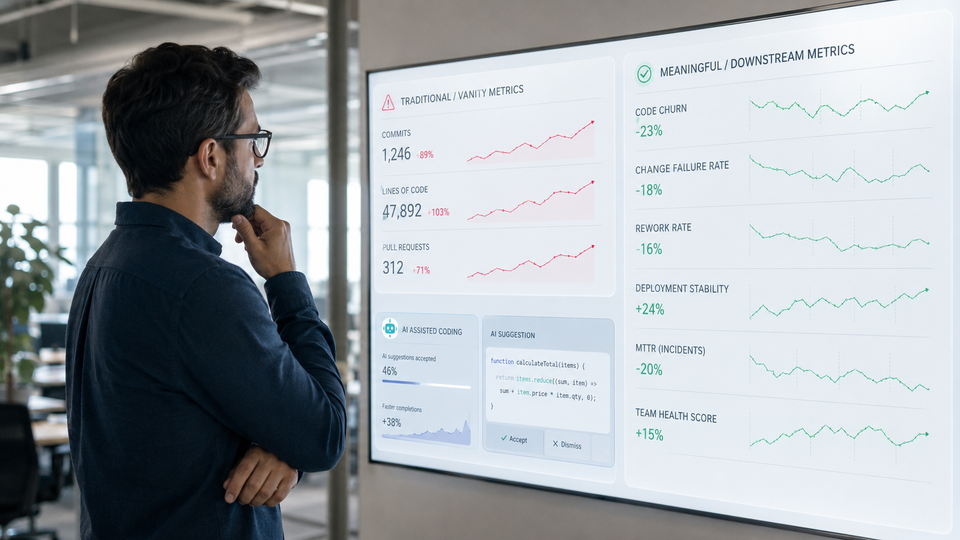
AI hasn't made engineering productivity unmeasurable. It's made the easy metrics dangerous, inflating commits and lines of code automatically, widening the gap between feeling fast and being fast, and hiding real costs downstream. Here's what breaks, why, and what to measure instead.
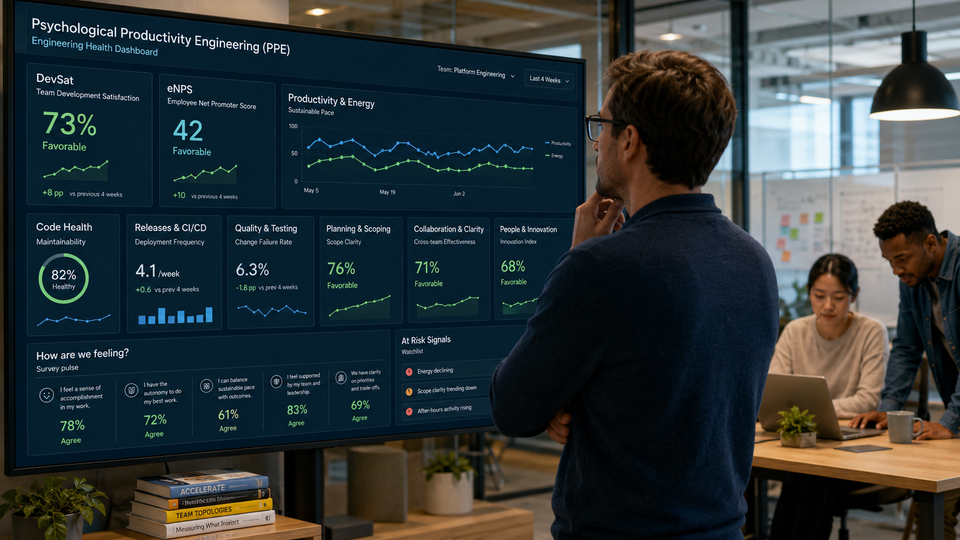
Two teams can post identical delivery numbers while one thrives and the other burns out. Psychological Productivity Engineering measures the human substrate beneath the output: a structured survey, a DevSat score, and a feedback loop that catches problems before they cost you people.
You cannot measure velocity directly without corrupting it. Measure flow instead. Cycle time, deployment frequency, change failure rate, restore time, and one satisfaction signal, plus what to track at your org size.
Software organizations face a critical challenge in measuring and improving developer productivity. While the technology industry spends over $300 billion annually on software development, studies show that:
* 35% of development effort is wasted